
The Hidden History of Daffodils: How Simple Living Leaves a Legacy
The Flowers That Outlive the House
Did you know that daffodils often outlive the homes they were planted beside?
The house can disappear.
The porch can rot away.
The family can move on.
But every spring…
The daffodils come back.
Sometimes they’re the only proof a home was ever there.
This is one of those quiet truths about simple living that most people never think about. The things we plant—literally and figuratively—can outlast us.
Today I want to tell you a story about daffodils.
But really…
It’s a story about legacy.
And about how the smallest acts of homesteading can leave marks that last generations.
Disclosure: As an Amazon affiliate, I earn from qualifying purchases at no extra cost to you. My blog contains other affiliate links as well for your convenience. To learn more, you may read my Disclosure Policy. Thank you for supporting my blog!
A Childhood Memory That Started With Flowers
When I was growing up in our Maryland farmhouse, my mom had a patch of daffodils beside the garage.
And when I say patch…
I mean FULL. Thick. Bright. Hundreds of blooms.
Every spring they exploded into yellow.
The kind of cheerful yellow that tells you winter is finally over.
But what made them special wasn’t just how beautiful they were.
It was where they came from.
My mom didn’t buy those bulbs at a garden center.
She dug them up from an abandoned homestead site at the beginning of our road.
Even when I was little, I don’t remember there ever being a house there.
Just an empty lot.
But every spring…
Hundreds of daffodils would bloom across the land.
Along with old trees and shrubs that clearly once framed a home.
Some people call places like that a ghost garden.
The house disappears.
But the plants remain.
And those daffodils stayed with me.
The Hidden History of Daffodils in America
There’s actually a fascinating bit of history behind this.
Daffodils were brought to America by early European settlers in the 1600s.
They quickly became a favorite flower for homesteads because they were:
- Hardy
- Easy to grow
- Deer resistant
- Able to multiply naturally
Women often planted daffodils around:
- House foundations
- Wells
- Fence lines
- Paths and outbuildings
They were a way of marking home.
And because daffodils multiply underground through bulbs, they don’t just survive.
They spread.
That’s why even today across Virginia, the South, and the Mid-Atlantic, you’ll sometimes see bright yellow flowers blooming in the middle of empty fields.
They aren’t wildflowers.
They’re remnants.
Living proof that someone once cooked meals there…
Raised babies there…
Hung laundry there…
Simple living leaves marks.
Not loud ones.
But lasting ones.
Learning That Even Hardy Things Need the Right Conditions
Years later, when we put in a patio at our Maryland farmhouse, we had to move those daffodils.
They couldn’t stay beside the garage anymore.
So we transplanted them near the pool area.
And honestly?
They didn’t do well there.
Too much shade.
Too much disruption.
They struggled.
Later, when we installed a new pool fence, I moved them again.
This time I planted them in a long line along the backyard fence.
And that’s when something clicked for me.
Simple living isn’t about perfection.
It’s about learning what works.
Daffodils love sun.
They need drainage.
They need space to multiply.
Even resilient plants need the right conditions.
By the time we left Maryland, that line along the fence was finally starting to establish.
Just starting to look full.
And then we moved.
Sometimes you plant something you don’t get to see fully bloom.
And that’s okay.
Carrying the Story to a New Place
Before we left Maryland, I went back to that old homestead lot at the beginning of the road.
The one where my mom had originally dug the bulbs.
And I dug up daffodils from there too.
I wrapped them up and brought them with us when we moved to Virginia.
Carrying flowers across state lines might sound a little silly.
But it didn’t feel silly to me.
It felt like carrying a story.
When we bought our land in Virginia, my kids, my aunt, and I planted those daffodils in a long line down our property boundary.
But here’s the part that made the whole thing feel almost magical.
When we first visited the property to buy it…
It was spring.
And there were already two huge daffodil patches blooming on the land.
Different varieties than ours.
But unmistakable.
Someone had planted them.
Years ago.
Maybe decades ago.
The house that once stood there?
Gone.
But the daffodils were still faithfully blooming.
And it warmed my heart in a way I can’t even explain.
We weren’t starting from nothing.
We were joining a story already in progress.
A Simple Family Rhythm
Now every spring, something special happens.
After the daffodils bloom, the kids and I dig them up.
We divide the bulbs.
And we plant them in new places across the property.
Along fences.
Near the barn.
Around trees.
Slowly, they’re spreading.
Not because we’re landscaping.
But because we’re building something.
And I hope one day my kids remember this.
Not just the flowers.
But the feeling.
The rhythm.
Hands in the dirt.
Talking about where the bulbs should go next.
Learning how things multiply.
Learning that growth takes seasons.
Learning that small, repeated actions turn into something bigger than you expect.
That’s legacy.
Not flashy.
Not viral.
But real.
Why Daffodils Are the Perfect Beginner Garden Plant
If you’re new to gardening or homesteading, daffodils are one of the easiest plants you can start with.
They’re almost the definition of beginner-friendly gardening.
Here’s why:
They come back every year
Plant them once and they’ll return each spring.
They multiply naturally
Over time, one bulb turns into many.
Deer and pests usually leave them alone
Which makes them ideal for rural and suburban areas.
They require very little maintenance
No complicated watering or fertilizing schedules.
They signal the start of spring
Few things lift your spirits like those first yellow blooms.
If you’re looking for a simple way to start modern homesteading, daffodils are a perfect first step.
What Will Remain From Your Home?
Here’s a question I think about a lot.
If someone walked your property 100 years from now…
What would tell them you lived there?
Would it be:
- Fruit trees?
- Lilacs?
- Daffodils?
- Old fence posts?
- Garden beds?
What would remain?
When I think about my mom digging bulbs from that abandoned lot…
And me digging them again before we moved…
And my kids dividing them now…
I see three generations connected by something simple.
Just bulbs.
Just flowers.
But also…
Story.
Continuity.
Proof that simple living is timeless.
Homes may change.
Addresses may change.
But what we plant—literally and figuratively—can carry forward.
And that is the heart of homesteading.
Not extremes.
Not aesthetics.
Not pressure.
Just rooted, repeated acts of care.
You Don’t Need Acres to Start
Maybe you don’t have land yet.
Maybe you don’t even have a garden.
That’s okay.
You can still plant something this year.
- A pot of herbs
- A small raised bed
- A fruit tree
- A handful of daffodil bulbs
Even one plant can start a story.
Plant something that says:
“We were here.
We built something.
We cared.”
Because simple living?
It leaves a mark.
Ready to Start Your Homestead Garden?
If you’re just getting started with gardening and want something simple and beginner-friendly, I created a free guide to help you take your first step.
No overwhelm.
No all-or-nothing pressure.
Just small, doable action you can start this season.
🌿 Grab the free guide below and start planting your own legacy.
And if you love story-driven homesteading like this, make sure you join the Hummingbird Acres community.
We’re building something rooted here.
Together.
Let’s keep planting seeds that outlive us.
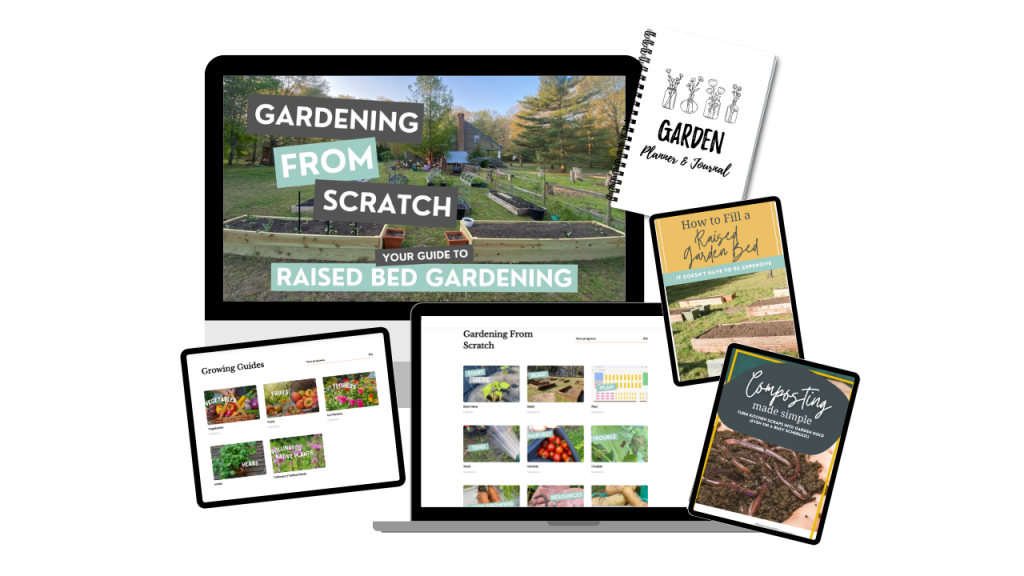
Introducing
Gardening From Scratch
Are you ready to dive into the world of gardening but feel a little lost on where to begin?
It’s easier than you think, and I’m here to help!