
Are Mason Jar Vacuum Sealers Worth It? My Honest Thoughts After Trying One
If you’ve spent any time looking at kitchen gadgets lately, you’ve probably seen an electric mason jar vacuum sealer.
Maybe you’ve wondered if it’s actually useful.
Or maybe you’ve wondered if it’s just another gadget that looks great on social media but ends up collecting dust in the back of a cabinet.
That was exactly where I found myself.
When I was sent one to try, I had two immediate thoughts.
The first was, This could actually be really useful.
The second was, This could also be one more kitchen gadget I absolutely do not need taking up space in my kitchen.
If you’ve been around Hummingbird Acres for very long, you already know how I feel about kitchen gadgets.
I don’t buy tools because they’re trendy.
I don’t keep gadgets because someone online says every homemaker needs one.
I want tools that support the way my family actually cooks, stores food, and lives every day.
So after spending some time with this electric mason jar vacuum sealer, here’s my honest opinion.
I wouldn’t tell everyone to run out and buy one.
But…
I can absolutely see it earning a place in the right from-scratch kitchen.
Let’s talk about why.
Disclosure: As an Amazon affiliate, I earn from qualifying purchases at no extra cost to you. My blog contains other affiliate links as well for your convenience. To learn more, you may read my Disclosure Policy. Thank you for supporting my blog!
What Does a Mason Jar Vacuum Sealer Actually Do?
Before deciding whether one is worth buying, it’s important to understand what it actually does.
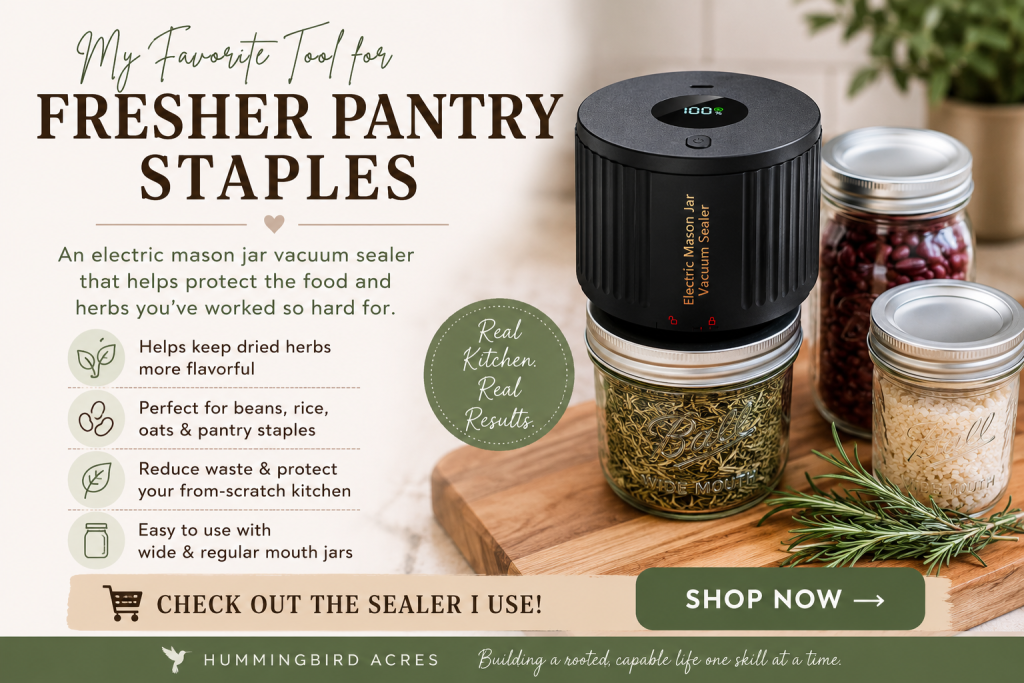
An electric mason jar vacuum sealer removes air from a mason jar and creates a vacuum seal beneath the lid.
That’s it.
It isn’t magic.
It isn’t preserving food forever.
It simply reduces the amount of oxygen inside the jar.
Why does that matter?
Oxygen contributes to:
- Food becoming stale
- Flavor fading
- Herbs losing potency
- Moisture affecting dry ingredients
- Shorter storage life for many pantry staples
Removing much of that air can help keep certain dry foods fresher longer while protecting the work you’ve already invested.
That’s the key.
I don’t see this as a miracle appliance.
I see it as a food storage tool.
What It Does NOT Do (And This Is Important)
This is probably the biggest misconception surrounding mason jar vacuum sealers.
They are not a replacement for canning.
A vacuum-sealed mason jar is not automatically shelf stable.
Pressure canning and water bath canning use heat processing to destroy dangerous microorganisms.
A vacuum sealer does not.
It only removes air.
That means you should not use a mason jar vacuum sealer for:
- Green beans
- Soups
- Meats
- Fresh vegetables
- Wet foods intended for pantry storage
- Any food that requires approved canning methods
Instead, think of this as a storage tool for dry pantry goods and certain refrigerated items.
Keeping those two uses separate is incredibly important for food safety.
Where I Think a Mason Jar Vacuum Sealer Really Shines
After thinking through how I actually use my kitchen, three categories immediately stood out.
1. Dried Herbs
This was the first use that immediately made sense.
Growing herbs takes work.
You plant them.
Water them.
Harvest them.
Wash them.
Dry them.
Why not store them well?
Herbs naturally lose flavor over time.
While no storage method completely stops that process, reducing air exposure helps preserve the flavor and aroma you’ve worked so hard to grow.
Instead of tossing dehydrated herbs into plastic bags, vacuum sealing them in mason jars feels like the final step in protecting the harvest.
Even if your harvest comes from a few containers on the patio, it still matters.
2. Dry Beans and Pantry Staples
The second category that really clicked for me was dry beans.
If you’ve ever tried storing half-used bags of beans, rice, oats, or flour, you know how frustrating flimsy packaging can become.
Plastic bags tear.
Clips fall off.
Ingredients disappear behind other things in the pantry.
Moving frequently used dry goods into mason jars creates a pantry that’s easier to see, easier to organize, and easier to use.
I also appreciate being able to quickly see:
- How much I have left
- What needs replenishing
- What I already own
Sometimes reducing food waste is simply a matter of making food visible.
Vacuum sealing those jars provides one more layer of protection while creating a pantry that functions better for everyday cooking.
3. The Little Pantry Items
This category surprised me the most.
Chocolate chips.
Spices.
Baking cocoa.
Homemade spice blends.
Tea.
Coffee.
Those little ingredients always seem to end up folded over with a clip and forgotten in the back of a cabinet.
They’re not expensive enough to feel urgent.
But over time they lose freshness, become stale, or simply get forgotten.
Vacuum sealing them in jars creates a cleaner storage system while helping reduce unnecessary waste.
Again…
Not because the pantry needs to look pretty.
Because it needs to work.
Why This Fits a From-Scratch Kitchen
One thing I kept coming back to throughout this review was this:
I don’t want tools that require me to change how I live.
I want tools that support the rhythms I already have.
If you’re someone who:
- Gardens
- Dehydrates herbs
- Bakes regularly
- Buys dry goods in bulk
- Keeps a well-stocked pantry
- Enjoys from-scratch cooking
then a mason jar vacuum sealer naturally fits into those routines.
It doesn’t create more work.
It simply helps protect the work you’ve already done.
Who Probably Doesn’t Need One?
I also think it’s important to be honest about who should skip this gadget.
If you:
- Buy small amounts of ingredients
- Rarely cook from scratch
- Don’t keep many pantry staples
- Prefer original packaging
- Know you aren’t going to transfer foods into jars
then this probably isn’t worth buying.
And that’s perfectly okay.
Not every useful kitchen tool belongs in every kitchen.
My Honest Verdict
So…
Are mason jar vacuum sealers worth it?
For the right homemaker?
Yes.
For everyone?
No.
I don’t think this is a miracle gadget.
I don’t think it’s essential.
I don’t think it’s going to transform your pantry overnight.
But I do think it solves a handful of real problems well.
It protects dried herbs.
It stores dry beans beautifully.
It helps organize pantry staples.
It gives spices and baking ingredients a better home.
Most importantly, it supports the systems you’re already building instead of asking you to create entirely new ones.
And that’s exactly what I look for in every kitchen tool.
Get our FREE Guide
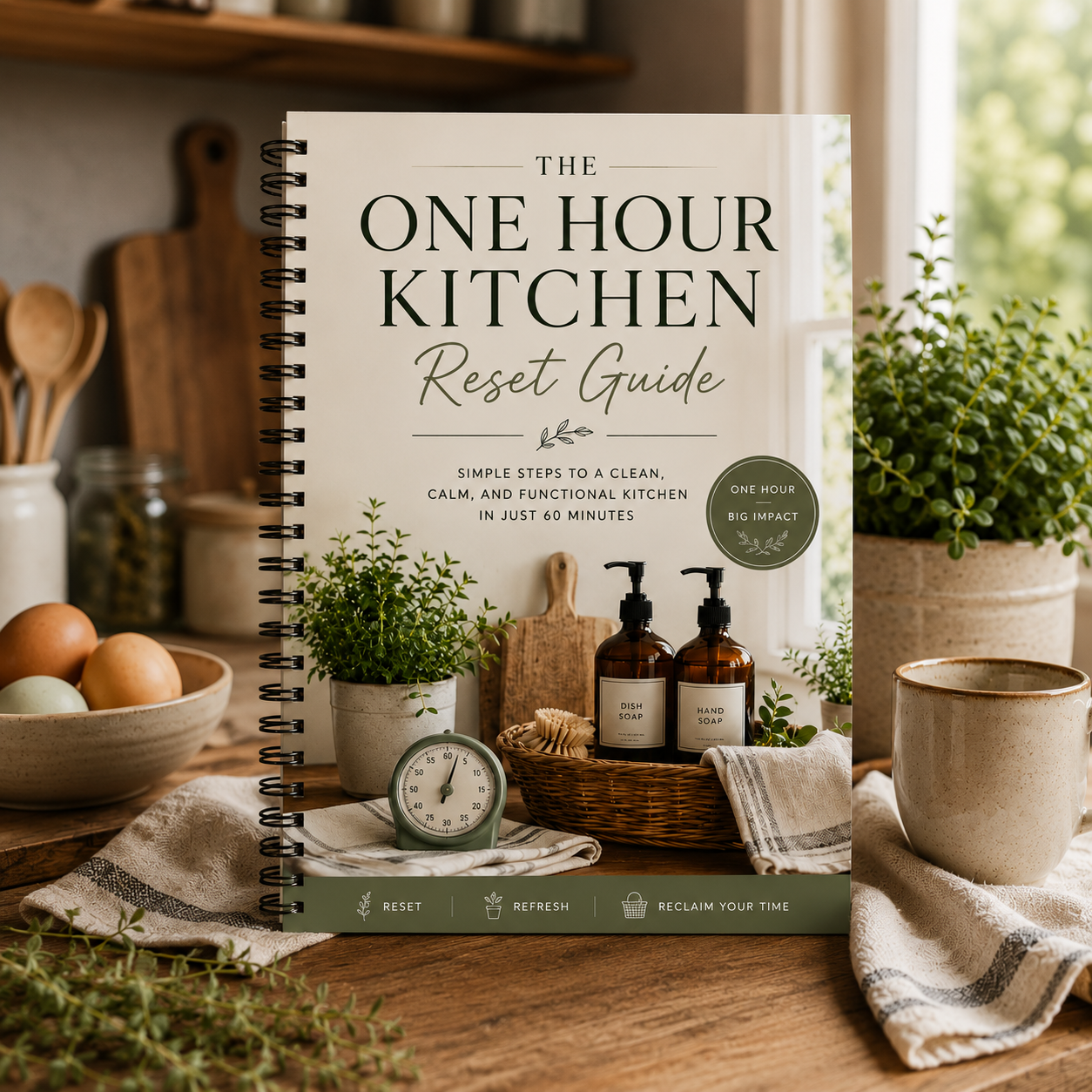
Build the Foundation to Your Rooted Kitchen
Transform your kitchen — and your peace of mind — in just 5 Days. The One Hour Kitchen Reset Guide is your simple, step-by-step guide to clearing clutter, creating calm, and making mealtime easier.
Enter your name & email so we can send your our FREE Guide.
The Bigger Lesson
At Hummingbird Acres, we aren’t trying to build perfect kitchens.
We’re building rooted, capable homes.
That means choosing tools intentionally.
Learning practical skills.
Creating systems that reduce waste instead of adding clutter.
Protecting the food we’ve worked hard to grow.
And making thoughtful decisions instead of impulse purchases.
Building a rooted, capable home isn’t about owning every gadget on the market.
It’s about creating simple systems that help you steward your time, your food, and the work you’ve already invested—one small skill at a time.
Because those small skills don’t just organize a pantry.
They build confidence.
They strengthen families.
And over time, they help create a home that feels peaceful, purposeful, and deeply rooted.
Frequently Asked Questions
Can a mason jar vacuum sealer replace canning?
No. A vacuum sealer only removes air from the jar. It does not heat-process food or make wet foods shelf stable. Always follow approved pressure canning or water bath canning methods for food preservation.
What foods work best?
Dry foods such as:
- Dried herbs
- Dry beans
- Rice
- Oats
- Flour
- Chocolate chips
- Coffee
- Tea
- Spices
- Baking ingredients
Does vacuum sealing make food last forever?
No. It helps reduce oxygen exposure, which can slow quality loss for many dry foods, but food still ages over time.
Is it worth buying?
If you regularly cook from scratch, garden, preserve herbs, and keep a working pantry, it can be a practical addition. If not, you likely won’t miss it.
Start where you are.
Not every kitchen needs every gadget.
But every kitchen benefits from thoughtful systems, practical skills, and the confidence to choose what truly serves your family.